The runway loses money. The perfume pays the bills. And the logo does the advertising. So what exactly are you paying for when you buy luxury?
There is something fascinating about the way high-end luxury works.
The grand runway shows. The impossibly beautiful boutiques. The couture pieces that take hundreds of hours to make. The craftsmanship, heritage, exclusivity and mystique. It all looks like one beautifully constructed world of luxury.
But behind the glamour is a very different business model.
The runway isn't necessarily where the money is made
For many major luxury houses, the most prestigious and creatively ambitious parts of the business are not necessarily the most profitable.

Haute couture, elaborate runway shows and highly exclusive collections are expensive to create. They require exceptional artisans, specialised ateliers, elaborate presentations and enormous creative investment. So where does the money come from?
Often, from the products that are much easier to produce and sell at scale: ready-to-wear, leather goods, shoes, accessories, beauty products and fragrances.
The couture creates desire. The perfume monetises it. A handbag makes the brand accessible to a much larger audience. A belt or wallet puts the name into everyday life.
And a lipstick can allow someone to participate in the world of a luxury house without spending thousands on a couture garment.
This is the halo effect of luxury. The most exclusive products build the dream. The more accessible products turn that dream into a business.
The logo is part of the product
There is another clever part of this system. When you buy a recognisable luxury logo and carry it through a city, you aren't just buying an object. You are also carrying the brand's advertising.
A logo on a handbag. A monogram on a belt. A recognisable pattern on a wallet. Everywhere you go, the brand goes with you. And that is part of the value you're paying for.
This isn't necessarily a criticism. Branding has value. Heritage has value. Design has value. Cultural relevance has value.
But it is worth understanding the distinction between paying for the thing and paying for what the thing represents. Because sometimes the premium isn't primarily about better materials, better construction or better performance. Sometimes, it is about the name attached to it.
The luxury paradox
This creates an interesting paradox. The products that are most visible to consumers are often the products that allow luxury houses to operate at enormous scale.
That means a consumer can spend a significant amount of money on an item that may be relatively simple to manufacture, primarily because it carries a famous name.
You get the status of the luxury house without spending the price of a runway piece. The brand gets something else in return:
Revenue, visibility and another person walking around as a billboard for the brand.

Again, there is nothing inherently wrong with this. But as consumers, we should know what we're participating in. Because expensive does not automatically mean exceptional. And a famous name does not automatically mean superior craftsmanship.
This is where we started thinking differently.
At Linen Trail, we started asking ourselves a very different question:
What if we built the brand around the product itself?
Not the logo. Not the status. Not the idea that something becomes valuable simply because fewer people can afford it. The product. The fabric. The construction. The hands behind it. The experience of wearing it.
That led us to what we call the Ferrari mindset. Not Ferrari as a fashion statement, but Ferrari as a philosophy.
Art over output.
Ferrari isn't built around the idea of making the most cars possible. It is built around making a very particular kind of car exceptionally well.

That is fundamentally different from the mass-market philosophy of a company like Ford, where scale, accessibility, efficiency and practicality are central to the business. Neither philosophy is inherently better. But they are built around different priorities.
One asks: How many can we make?
The other asks: How good can we make this?
We wanted to build around the second question.
So we chose one thing.
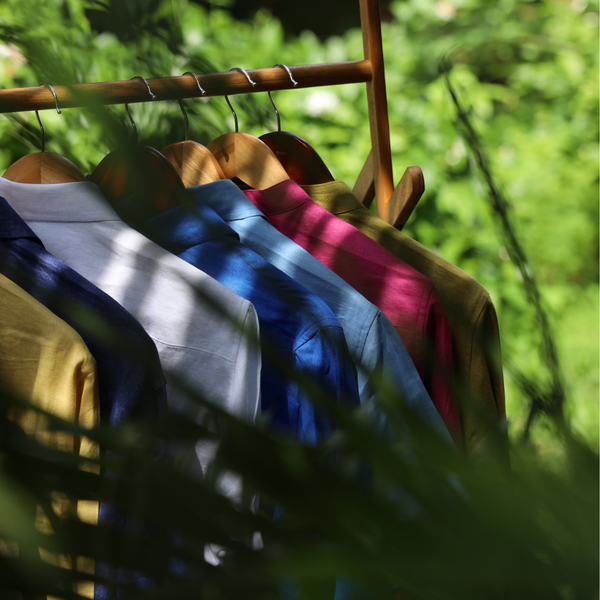
Linen. Not linen blended with something else. Not linen as one category among dozens of fabrics. Not linen because it happened to be trending.
100% pure linen.
And then we went down the rabbit hole. Where does the flax come from? How is the fibre processed? How does the weave affect the way the fabric feels? How should linen fall on the body? How should it be cut? How should it be stitched? What happens after washing? What makes one linen shirt feel completely different from another?
Because when you decide to do one thing exceptionally well, you eventually realise that the thing itself is much more complicated than it first appears.
The part of craftsmanship you can't see
This is the strange thing about craftsmanship. Most of it is invisible.
You see a shirt.

You don't see the years of learning behind it. You don't see the hands that cut the fabric. You don't see the tailor who knows how a particular linen behaves. You don't see the tiny adjustment to a seam. The way a collar sits. The way a sleeve falls. The decision to change a measurement by a few millimetres.
The countless small choices that ultimately determine whether something merely looks good or feels right.
And that is what makes true craftsmanship difficult to communicate. Because you can't always photograph it. You can't always put it on a billboard. You can't always explain it in a product description.
You have to feel it.
We didn't want luxury to be distant.
There is another part of the traditional luxury model that never quite made sense to us.
Why should exceptional fabric and craftsmanship have to be inaccessible? Why should luxury necessarily mean an enormous price tag? Why should a beautiful piece of clothing need a giant logo to tell you that it is valuable?
We wanted to explore something different.
Quiet luxury.

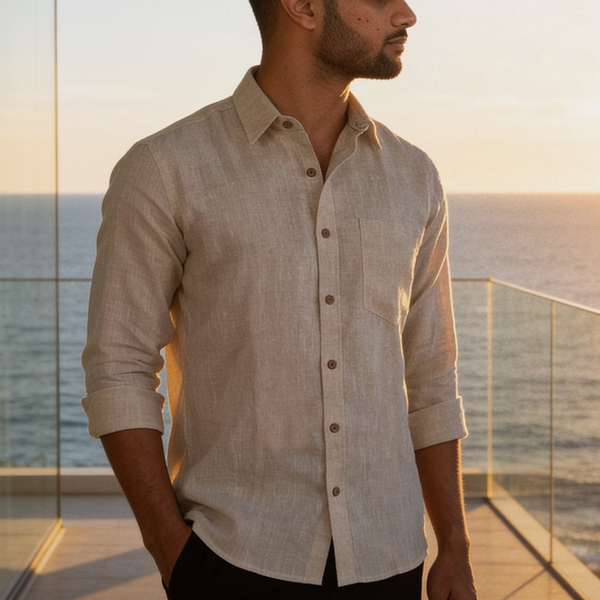
Not luxury that announces itself. Luxury that reveals itself slowly. The quality of the fabric. The way it breathes. The way it moves. The way it ages. The construction.
The feeling you get when you wear something that has been made properly.
So what are you really buying?
The next time you're tempted by an "affordable" luxury perfume, lipstick, belt or wallet, pause for a moment.
Ask yourself:
Am I buying the product? Or am I buying the name?
There is nothing wrong with buying a name. If the name means something to you, that has value. But we believe consumers deserve to understand the difference. Because the most valuable thing about clothing doesn't always sit on the outside. Sometimes there is no logo. Sometimes there is no status symbol.
Sometimes there is simply exceptionally good fabric, carefully cut and made by someone who knows exactly what they are doing. And maybe that's what luxury should have been all along. Not the loudest name in the room. Just the best thing in the room.
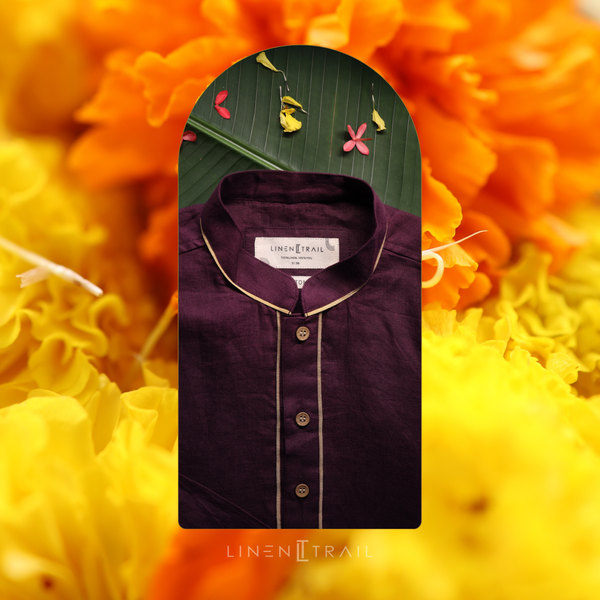
That is the idea behind Linen Trail. We aren't trying to make something for everyone. We are trying to do one thing exceptionally well. Pure linen. Thoughtfully made. Quietly exceptional. And whether you ever buy from us or not, we hope that is the bigger takeaway:
Know what you're paying for.
Because once you understand the difference between a logo and craftsmanship, you start looking at luxury very differently.