If you’ve ever worn one shirt that stayed fresh through a long day and another that felt heavy by noon, the difference comes down to the types of fabrics.
Some fabrics breathe. Some trap heat. Some soften with time. Others lose their shape after a few washes.
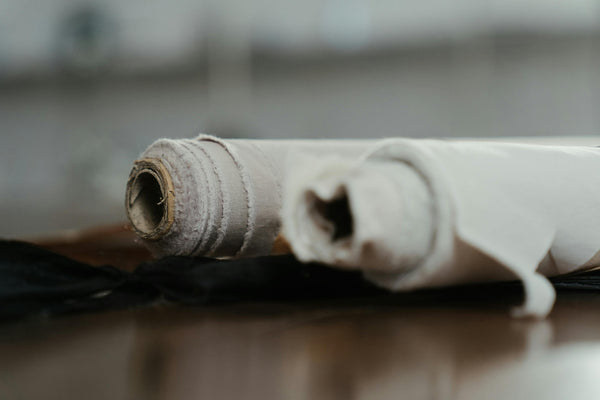
At Linen Trail, we’ve seen this up close. If you stand inside our workshop early in the morning, before the day fully begins, fabric tells its own story. One roll feels crisp, another falls softer. One resists the air, another lets it pass through. That difference is not by accident; it’s by fibre, weave, and time.
A customer once told us his shirt still felt light after hours of travel. Another said the fabric only got better after every wash. That’s the quiet truth about fabric: it doesn’t just cover you, it works with you.
So before you choose what to wear, it helps to understand what you’re really wearing, and why it matters more than most people think.
Understanding the Main Types of Fabrics
All fabrics fall into three broad categories. This is where most people begin, but very few go deeper.
1. Natural Fabrics
Made from plants or animals. These include linen, cotton, wool, and silk. They are breathable, comfortable, and often age well.
2. Synthetic Fabrics
Made using chemical processes. Polyester, nylon, and acrylic fall into this category. They are engineered for durability but often compromise on comfort.
3. Blended Fabrics
A mix of natural and synthetic fibres. Designed to balance softness and strength, though they rarely deliver the best of both.
Each category serves a purpose. But not every fabric serves your everyday life, especially in warm, humid conditions where comfort becomes non-negotiable.
Natural Fabrics: Where Comfort Begins
Linen – The Fabric That Breathes
There’s a reason linen has stayed relevant for centuries, quietly outlasting trends.
It begins with flax fibres, spun and woven into a fabric that feels cool from the very first wear. Unlike most fabrics, linen doesn’t need time to “break in.” It starts soft and only gets better.
In real life, that means:
- You stay fresh longer
- Your shirt doesn’t cling to your skin
- Air moves freely through the weave
- The fabric relaxes and softens over time
At Linen Trail, every piece begins with carefully sourced flax and is pre-washed to reduce shrinkage and improve comfort from day one. This process ensures that what you wear today will feel even better months later.
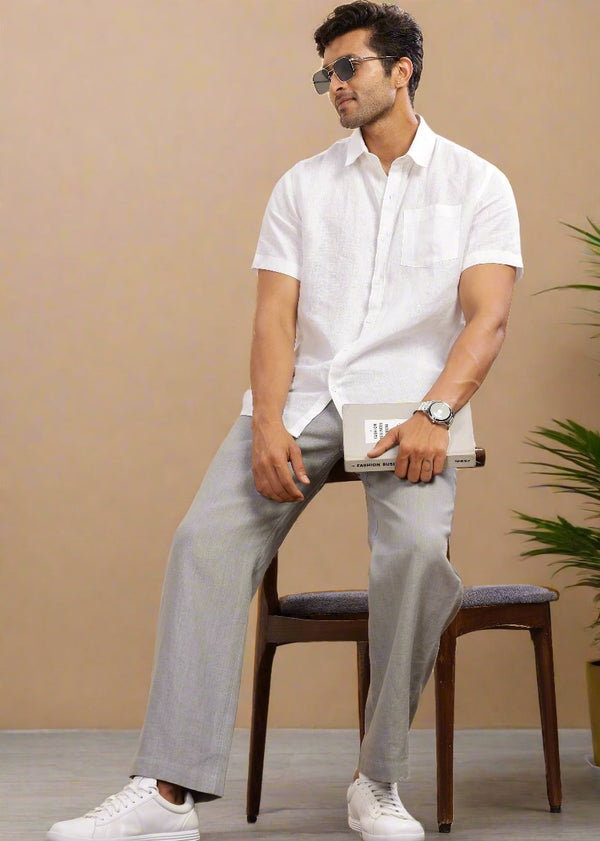
A shirt like a full-sleeve classic or a mandarin-collar half sleeve isn’t designed for one season. It’s designed to stay relevant across years, worn, washed, and worn again.
Style insight: Linen looks best when it’s not forced. Let it sit naturally on your body. A slight wrinkle, a relaxed fall, that’s where its character lives. You can explore everyday options like a sky blue linen shirt or a light blue linen shirt, both designed for breathability and effortless wear.
Cotton – The Everyday Essential
Cotton is familiar. It’s often the first fabric people reach for because it feels soft and easy.
It works well in controlled environments. But step into humidity, and cotton begins to hold onto moisture.
That leads to:
- Fabric that feels damp over time
- Reduced airflow
- Less comfort during long hours
Cotton has its place. But it doesn’t adapt the way linen does. For a softer neutral wardrobe, you can also explore options like a beige linen shirt that offers better breathability with a similar ease.
Wool – Built for Warmth
Wool is designed to insulate. It traps heat, making it ideal for colder climates.
But in warmer regions, it becomes impractical for daily wear. It’s heavy, and it holds warmth close to the body.
Silk – Smooth but Delicate
Silk carries a natural sheen and drapes beautifully.
But it demands care:
- It’s delicate
- Sensitive to sweat
- Not ideal for everyday use
It’s a fabric for occasions, not for daily movement.
Synthetic Fabrics: Function Over Feel
Polyester
Polyester is everywhere because it’s easy to maintain. It resists wrinkles and lasts long.
But there’s a trade-off.
Polyester doesn’t breathe.
You’ll often notice:
- Heat trapped inside
- Increased sweating
- Fabric that feels artificial over time
Nylon
Lightweight and strong, often used in activewear.
But for everyday clothing, it lacks the comfort that natural fibres offer.
Acrylic
Used as a substitute for wool, but without the same breathability.
It looks similar, but it doesn’t feel the same.
Blended Fabrics: The Middle Ground
Blends are created to combine the strengths of different fibres.
For example:
- Cotton-poly blends for durability
- Linen blends for wrinkle resistance
But most blends come with compromise.
You may gain:
-
Slightly better durability
But lose:
- Full breathability
- Natural softness over time
Blended fabrics are practical. But they rarely offer the full experience of a pure fabric.
How to Choose the Right Fabric for Your Lifestyle
Understanding the types of fabrics is one thing. Choosing the right one is about how you live.
-
For Hot Weather: You need airflow. Fabrics like linen allow heat to escape and keep you comfortable. Pairing breathable fabrics with the right colours also helps, this guide on best colour combination for men can help you refine your choices.
-
For Travel: Look for fabrics that stay fresh longer and don’t need frequent washing.
-
For Daily Wear: Comfort matters more than appearance over time. A fabric that breathes will always feel better by the end of the day.
-
For Long-Term Use: Choose fabrics that improve with time. Linen softens, adapts, and holds its structure longer.
This is where most wardrobes shift, from buying more clothes to choosing better ones.
Why Linen Continues to Lead
At Linen Trail, linen is not just a fabric choice. It’s a philosophy.
Every fabric we work with is designed to:
- Adapt to your day
- Stay breathable for hours
- Feel lighter as you move
Naturally, linen is:
- Breathable
- Moisture-wicking
- Antibacterial
- Gentle on the skin
- Sustainable and biodegradable
But beyond features, it’s about experience.
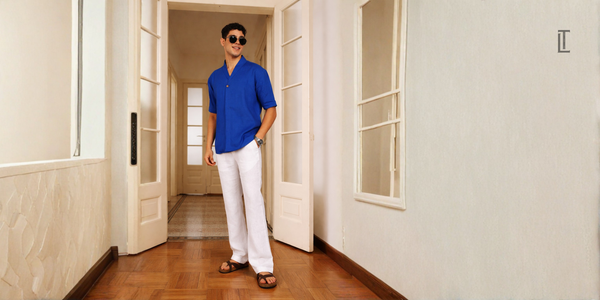
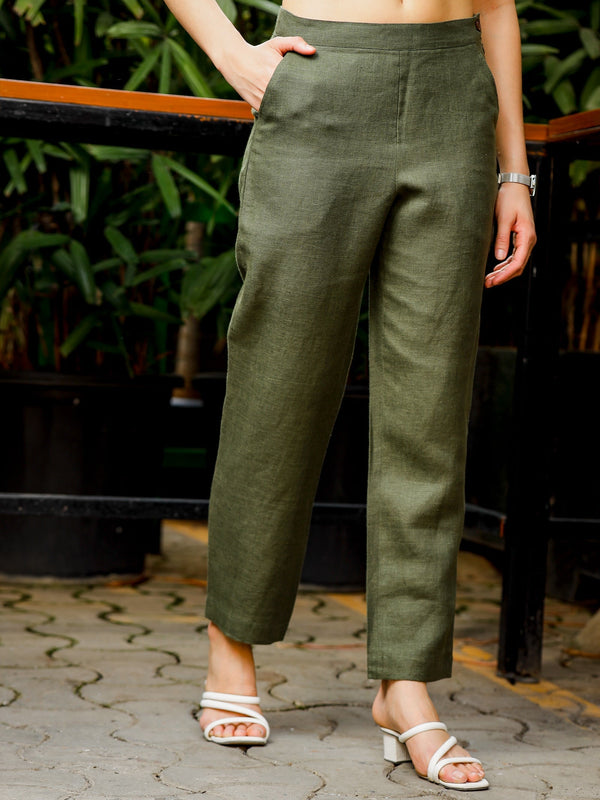
A well-made linen shirt doesn’t demand attention. It earns it over time. You might pair it effortlessly using guides like white pant combination shirt or explore deeper tones with dark green shirt matching pant.
You wear it once for comfort.
You keep wearing it because nothing else feels quite the same.
The Linen Trail Approach to Fabric
If you look closely at our collections, you’ll notice something consistent.
We don’t chase fast trends. We refine everyday essentials.
Each shirt and each pair of trousers is built around:
- Clean cuts
- Balanced structure
- Fabric that moves naturally
Our process focuses on getting the basics right, fabric quality, fit, and finish.
Customers often tell us the same thing in different ways:
The fabric feels honest. The comfort stays, even after repeated wear.
That’s the outcome of thoughtful craftsmanship, not shortcuts.
Start Your Linen Journey with Linen Trail
If you’re rethinking the types of fabrics in your wardrobe, start with the one that works without effort.
Explore our range of:
- Men’s Linen Shirts crafted for breathability and everyday elegance
- Pure Linen Trousers tailored for comfort, movement, and long wear
At Linen Trail, every piece begins with carefully chosen flax and is shaped through a process that prioritizes feel over speed.
The result is clothing that doesn’t just look good for a moment, but feels right for years.
Wear something that stays with you, through work, travel, and everything in between.
Frequently Asked Questions
Q1. What are the main types of fabrics?
The main types of fabrics include natural fabrics like linen and cotton, synthetic fabrics like polyester, and blended fabrics that combine both.
Q2. Why is linen considered one of the best fabrics?
Linen is breathable, moisture-wicking, and becomes softer with every wash, making it ideal for long-term comfort.
Q3. How do I choose the right fabric for daily wear?
Choose breathable and durable fabrics like linen that stay comfortable throughout the day.
Q4. Can synthetic fabrics be worn in summer?
They can be worn, but they trap heat and are less breathable compared to natural fabrics.
Q5. Is linen better than cotton?
Linen is more breathable and dries faster than cotton, making it more suitable for warm climates.
Q6. Will linen shrink after washing?
Pre-washed linen has minimal shrinkage and maintains its fit over time.
Q7. Can linen be worn all year round?
Yes, linen adapts to temperature changes and can be layered in cooler months.
Q8. How long does linen fabric last?
Linen is highly durable and can last for years, becoming softer and more comfortable with every wash.